Oil and gas · Strategy and operations

We set the AI strategy for oil and gas.Then we run it.

Krog is the strategy partner and the vendor — one firm, one mandate, across upstream, midstream, LNG and refining. We answer for the numbers after go-live, not only for the recommendation that produced them.

  • Oil and gas only
  • Advisor and vendor, one contract
  • Patented AI system
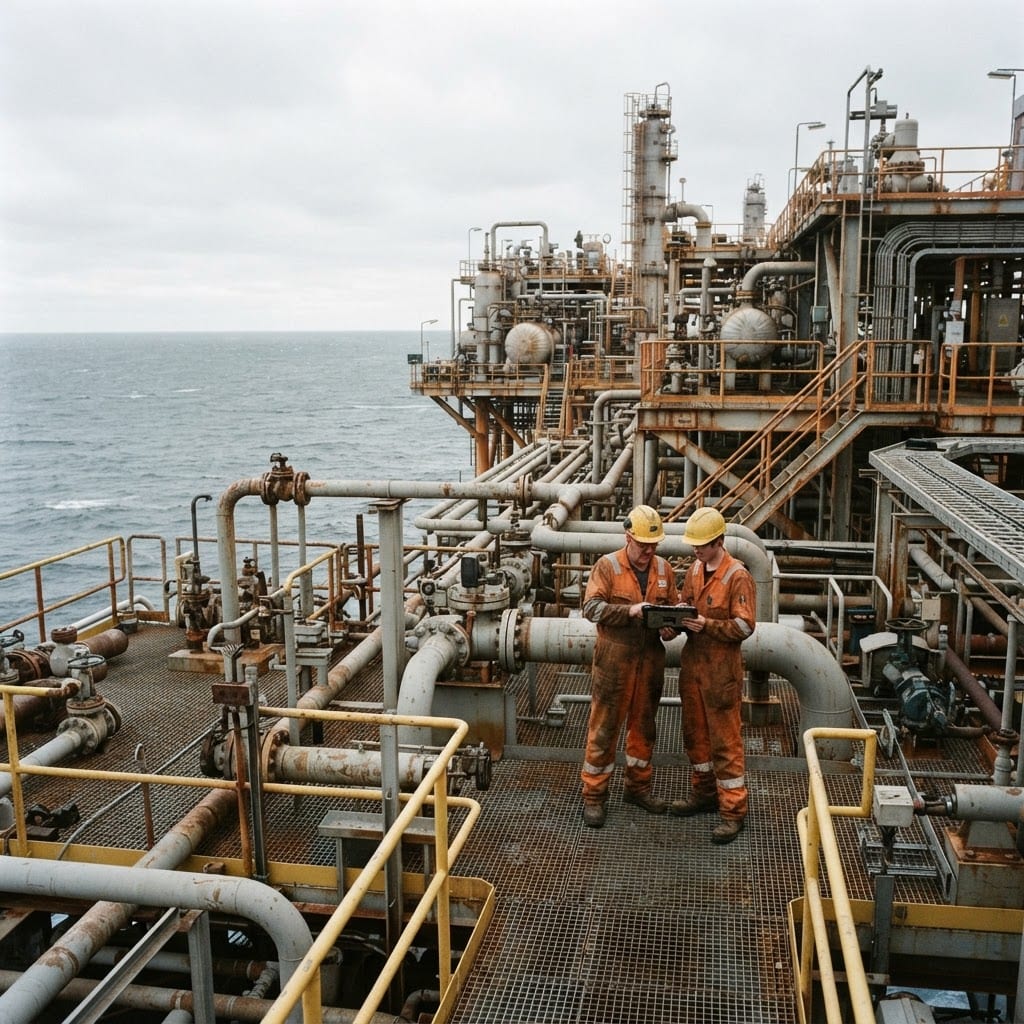
Technicians reviewing live production data on the deck of an offshore platform
We work on the asset, inside your permit and change-control systems.

The mandate

One mandate. Two obligations.

Consultancies hand over a roadmap and leave. Integrators build whatever the roadmap told them to build. Krog signs for both, which has one useful consequence: we cannot recommend anything we are not prepared to operate.

Krog.AIKrog.AI

AI strategy

Where AI earns its place

What is worth doing, in what order, against the constraints the asset actually has — regulatory, subsurface, and the ones nobody wrote down.

  • Value cases written against deferment and opex
  • Sequenced to turnarounds and drilling campaigns
  • Governance that survives process safety review
  • Target architecture across the OT/IT boundary

AI operations

The systems that deliver it, run for years

We are the vendor as well. We build it, commission it, and hold it to its numbers through crew rotations and budget cycles.

  • Commissioned against written acceptance criteria
  • Integrated with the historian, CMMS and ERP
  • Watched for drift, sensor fault and degradation
  • Operated under SLA alongside your crews

One accountable party — first diagnostic to year five

AI strategy

Strategy your engineers can argue with.

An AI strategy for a producing asset is not a technology roadmap. It is a series of decisions about which constrained processes deserve intervention, what a defensible case looks like when the field has twenty years left on it, and which risks the operation cannot reasonably be asked to carry.

We start in your historian, your well files and your maintenance history, then test every hypothesis against the people who actually run the asset. What you get back is a sequence you can fund, defend in a safety review, and hold us to.

  • Diagnostic on historian, well and maintenance data
  • Cases signed off by asset leadership and finance
  • Sequenced to turnarounds and drilling campaigns
  • Autonomy levels agreed before anything ships
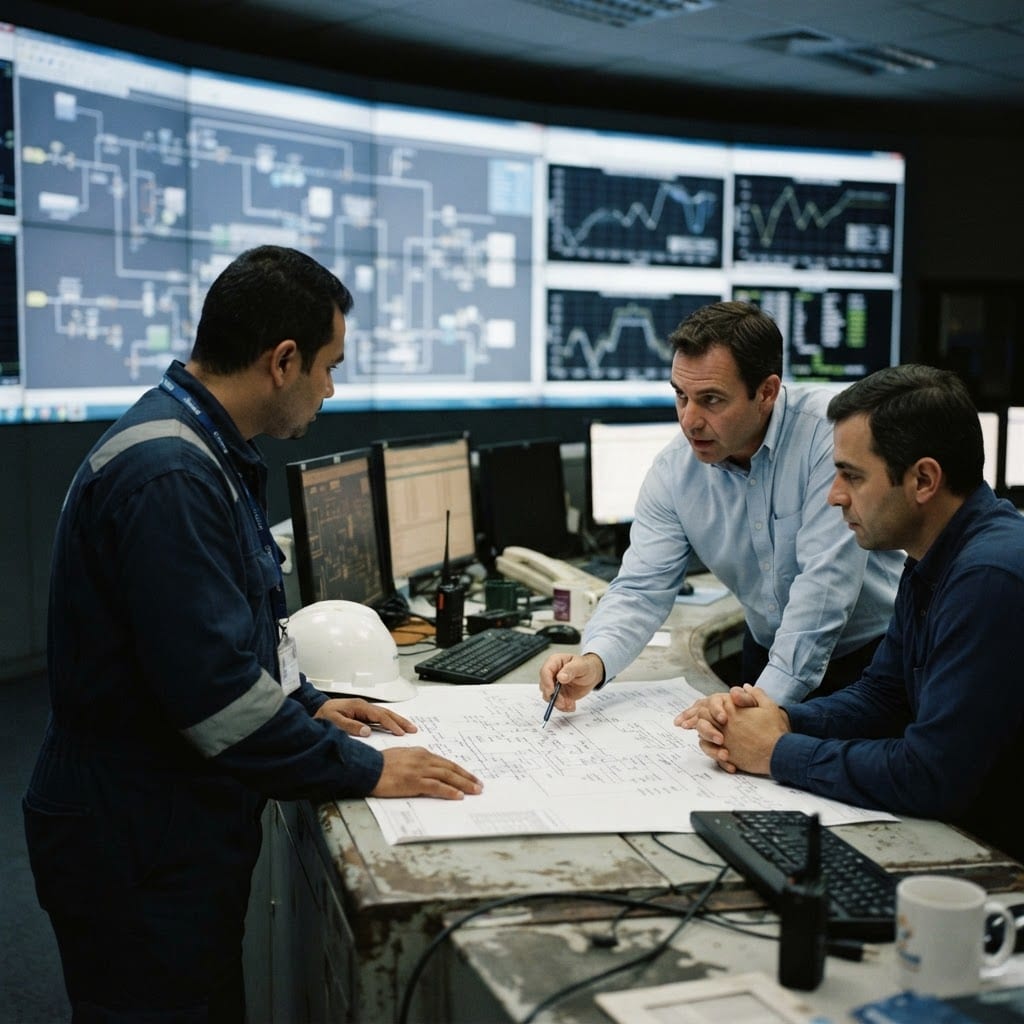
Asset leadership and engineers reviewing process diagrams in an oil and gas control room

AI operations

We build it, commission it, then stay on the asset.

Krog is the vendor, not a recommender of vendors. Our engineers work at the cabinet and in the historian, inside your permit-to-work and management-of-change process, under the same access discipline as anyone else on site.

Go-live is where the obligation starts. Feedstock shifts, instruments drift, wells decline and units get re-rated. We keep the system inside its acceptance criteria for as long as we hold the mandate — and we are the ones paged when it moves outside them.

  • Commissioned against written acceptance criteria
  • Integrated with PI historian, CMMS and ERP
  • Drift, data quality and sensor fault monitoring
  • Named engineers on call under SLA
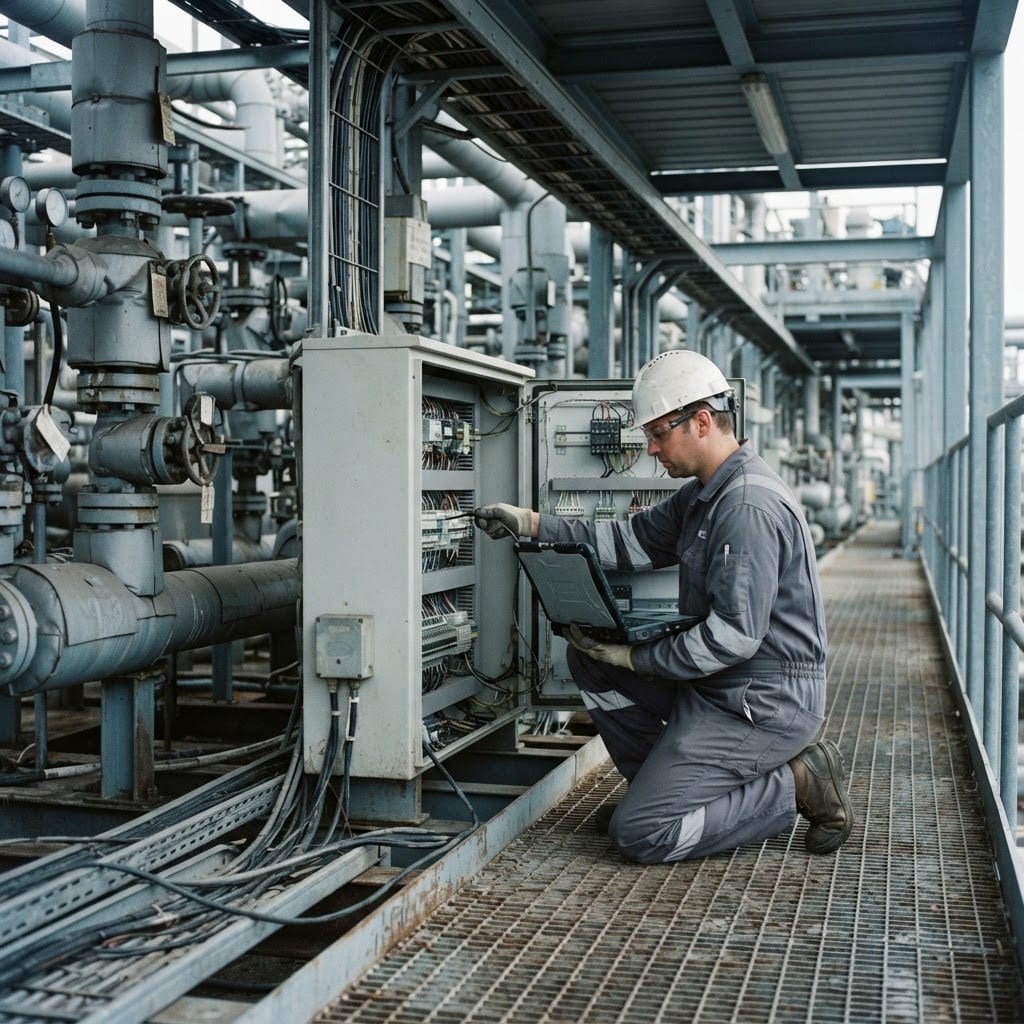
Krog engineer connecting instrumentation inside a control cabinet at a gas processing facility

Where we work

Oil and gas. Nothing else.

Krog does not serve retail, banking or software. Every engineer we hire, every reference architecture we own and every failure library we maintain points at hydrocarbon production — where a bad recommendation costs a platform, a unit or a licence, not a quarter.

The specialisation is the product. It is why the first session starts roughly where a generalist firm arrives in month six, already fluent in your operating envelope, your regulator and your vocabulary.

  • Offshore production

    Platforms, FPSOs, subsea tiebacks

  • Onshore & unconventional

    Pads, artificial lift, field-wide optimisation

  • Drilling & wells

    Campaign planning, integrity, intervention

  • Refining

    Crude units, FCC, hydrotreating, blending

  • LNG & gas processing

    Liquefaction trains, treatment, regasification

  • Pipelines & midstream

    Compression, leak detection, throughput

  • Terminals & storage

    Tank farms, loading, hydrocarbon accounting

  • Integrity & emissions

    Corrosion, inspection, flaring, methane

Why this partner

Why operators keep us on the asset.

The 2026 market has no shortage of capable generalists. Very few of them will be on the line at three in the morning when a model starts drifting on a night shift.

Specialised to the point of being narrow

Oil and gas is the only industry we serve, so our reference architectures, equipment models and failure libraries already have the shape of your asset. Rotating equipment degradation, separation and treatment behaviour, well performance and integrity data are not new problems here.

You are not funding our education in your industry. Every hour we bill goes to your operation rather than to learning what a turnaround is.

Patented AI system

Our customers get privileged access to patented AI innovations under development since 2019 — a level of accuracy and performance the broader market cannot currently put into production.

Accountable past go-live

The people who recommend the work are the people who operate it. There is no vendor triangle to arbitrate, and no handover cliff where the business case quietly stops being anyone's problem.

Built for the OT boundary

Deterministic behaviour, degraded links, zone classification, change control and the safety case are design inputs from the first sketch. Segmentation and least privilege are assumed, not retrofitted the week before commissioning.

Priced like an operating relationship

Operators plan in decades and fund in turnaround windows. Our engagements are multi-year operating agreements, not a stack of statements of work that expire long before the asset does.

The engagement

Four phases. The fourth has no end date.

The first three are what a consultancy sells. The fourth is what a producing asset actually needs, and it is the one this firm is built around.

  1. 01

    Assess

    Weeks

    We come to the asset. Historian and maintenance data, the control philosophy, the operating envelope, the constraints nobody documented, and the operators who already know where the losses are.

  2. 02

    Set

    A quarter

    The strategy: portfolio, sequence, target architecture, autonomy levels, governance, and a case your finance function is willing to hold us to.

  3. 03

    Build

    Per release

    Design, build, integrate and commission inside your management-of-change process, against acceptance criteria agreed before a line of code is written.

  4. 04

    Operate

    Open-ended

    Run it, watch it, extend it. Wells decline, units get re-rated, instruments drift and models age. This is where a Krog partnership spends most of its life.

Phase four has no end date, and the strategy gets rewritten from inside it. In 2026 the only AI strategy worth paying for is one written by the people already carrying the pager.

Start here

Let's talk about the asset, not the roadmap.

A first conversation is an hour with your operations and technology leads. If oil and gas is not where your losses are, we will tell you and point you somewhere better.